
(Akiit.com) Caring for aging parents involves making many small decisions quickly. One of the most immediate, and often contentious, is determining what to do with their home. Not whether to move, but whether the space they live in now is safe for them.
Few homes are designed for the way bodies age in their seventies and eighties. Vision becomes less acute. Coordination diminishes. A stair railing that used to steady a wobbly climb now must be able to take a larger man’s weight and stay bolted to the wall. The good news is that most of these dangers can be eliminated with quick and inexpensive fixes.
Remove The Quiet Hazards First
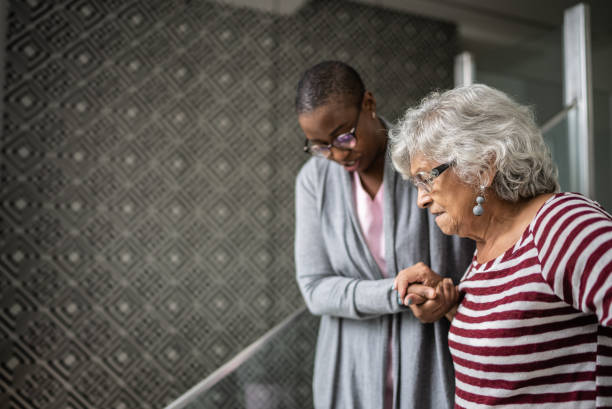
The best place to start is the floor. Loose rugs, cords running across walkways, and furniture placed too close together are things we stop noticing. A fresh set of eyes usually spots them right away though. Walk through the home specifically looking for anything that could catch a foot.
One out of every four older adults falls each year, but less than half tell their doctor about it (CDC). That gap matters, because it means many falls that could prompt a safety review go unaddressed. Environmental changes won’t end up on a medical chart, but they’re often more effective than any single intervention.
After the floor, lighting is probably the single most underrated safety factor in an older home. High-contrast LED lighting in hallways, stairwells, and bathrooms helps compensate for reduced depth perception. Motion-activated lights are particularly useful at night, when getting up for a glass of water becomes a higher-stakes trip than it sounds.
The Bathroom Deserves Its Own Plan
The bathroom is the room in the house that has the highest potential of risk, but it is also the room that most people lose time in trying to address. Wet surfaces, confined space, and the effort and physical demands of bathing can justify treating it differently.
For example, non-slip flooring – or bath mats with suction cups rather than decorative bath mats – is a simple and logical precaution. Purchase, reinforce, or install grab bars near the toilet and inside the shower. Grab bars, for instance, that are mounted into the drywall without the proper anchoring into the studs will give way when pressure is applied; you don’t want this to happen when you need them most. A comfort height toilet makes it easier on the sit/stand; a shower chair turns a risky standing shower less of a risk to a manageable seated shower.
An occupational therapist can walk through the house and see the potential dangers that a regular person wouldn’t see. Most of them will customize specific modifications based on how the individual actually moves.
Know When The Home Has Reached Its Limits
There comes a point in many caregiving situations where you’ve made the changes, added the gadgets, and the house still isn’t enough. For us, and so many, this is typically when the primary challenge is cognitive decline, not solely physical decline.
Wandering is one of a few key indications of this. When your parent is regularly trying to leave the house in the night, or you can’t leave them alone for a couple hours without the risk of injury, your physical environment and gadgets can only help you so much. They will likely set a cushioned alarm on the door but that’s not supervision.
Even if you’re not at that point yet, you as a caregiver are also likely finding simple daily reality to be emotionally exhausting at times. Instead of thinking about technology to compensate, you’re constantly thinking about safety, especially when combining a busy work schedule and active young children at home.
In those moments, caregivers searching for memory care near me minneapolis are often finding that the level of structure and professional oversight found in a dedicated memory care setting is what the situation actually requires – not because the home failed, but because the needs changed.
But their efforts were what bought them more time to live on their own and that is no small feat.
Add A Smart Layer For Early Cognitive Changes
For people with early-stage forgetfulness, some of the most effective tools are not structural in nature. An automatic stove shut-off device that cuts power when the burner’s been on too long. A water leak sensor that catches an overflowing sink before it’s a slip hazard. Door and window sensors that can alert a caregiver remotely if something is left open overnight.
Medical alert systems, the wearable buttons that connect you to emergency services, have also improved by leaps and bounds and are worth revisiting if you doubted them before. The new ones are less conspicuous in the home, and some include fall detection for the user that doesn’t require the user to press anything.
All that said, these work better as a layer on top of physical modifications than as a replacement for them. They are not a substitute for social contact: Isolation has measurable health consequences for older adults. And making sure the home supports easy access to outdoors and easy access to communication tools – a simple tablet set up, a chair near a window with a view – matters more than it might seem.
The Goal Is Always More Time, Not Perfection
There is no home alteration that can remove all possible danger. The objective is to minimize the most probable risks, enhance the ability to function on a daily basis, and ensure that the environment remains functional for as long as possible. It’s something that’s worth doing right, and it’s worth going back to when the requirements change.
Staff Writer; Fred Barker