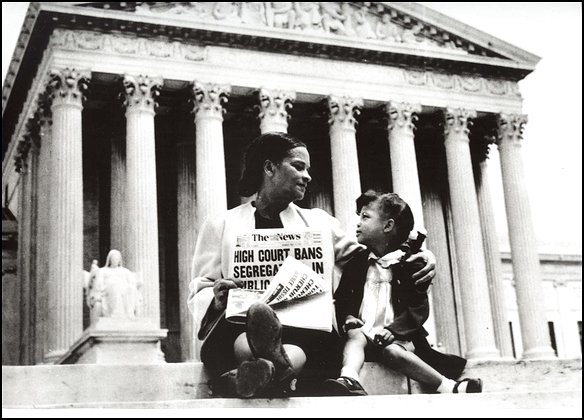

(Akiit.com) I’ve got two words for white America: Thank you.

Thanks for building homes in poor communities through programs such as Habitat for Humanity; for working with HIV/AIDS relief programs in places such as sub-Saharan Africa.

Thanks for mobilizing the Innocence Project, which is freeing wrongly convicted prisoners, many of whom are black.

When I see such noble efforts, when I witness men and women of all races working for a common good, my faith in humanity is restored.

Reminds me of my own childhood, a time when Jim Crow’s calloused grip on our Southern lifestyles and customs could be seen in whites-only community centers, or in the segregated schools that survived well into my youth.

I can’t forget that.

But it also was a time when more than a few white people availed themselves to me as coaches, mentors, teachers, friends – and heroes.

I can’t forget that, either.

Those two seemingly incongruous images bespeak the layered complexity of America’s race relations, which, despite the growing presence of Hispanics and other ethnic groups, still tends to be defined in black and white.

I wrestle mightily with the notion that many white people are growing tired of blacks dredging up our “painful past.” Truth is, black folks get a little miffed when whites, whose triumphs and successes are well chronicled in history books, tell us, “Get over it!” Or “Move on!”

That task is as daunting as it is unrealistic for a people still piecing together its legacy.

I was struck by what Helen Biderman, an 80-year-old Jewish woman, said about Holocaust Remembrance Day. She was 11 when the Germans invaded Poland in 1939 and forced her family to live in a ghetto. Her family ultimately fled, with members at one point hiding in a chimney.
Read The Full Story…

Tags: , , , , , , , , , ,

(Akiit.com) Shukura Sentwali is going home — to Ghana, West Africa.

Sentwali, a Wichitan and longtime community activist, said she’s moving to Africa next year because two Ghanaian chiefs are offering free land to descendants of slaves.

The gesture means to atone for Ghana’s participation in the African slave trade, but the land holds deeper meaning for Sentwali because it provides her a way to fulfill a lifelong mission to improve life for black people.

In Wichita, she coordinated the black infant mortality program. She advocated for neighborhood schools over busing for integration. She taught black children in community recreation centers about their history.

But lately, Sentwali said she has wondered what she accomplished in the past 30 years.

She now concludes that the wrongs against African-Americans can’t be corrected because the nation won’t fully acknowledge them — even as a black man moves closer than ever before to the White House.

So she’s heading home.

She acquired her land in 2006, after attending a conference in Philadelphia presented by Fihankra International, which is overseeing the development.

We shouldn’t waste any more time, energy or resources trying to convince the United States government or white people of what is wrong, and what has been wrong,” she said, her voice in staccato. “We need to use all of our energy and resources on building our own economic, political and social base.”

A foothold in Ghana

The 52-year-old said she’ll miss her friends and family in the U.S. Some may join her later.

She plans a return trip to Ghana later this year to see the progress on her three-bedroom, 1,901-square-foot home.

The plan for the house, along with the title to the property, rests in a folder overflowing with other papers about Ghana. Her annual site fees — similar to property taxes — cost about $750.
Read The Full Story…

Tags: , , , , , , , ,

(Akiit.com) Statistics show disturbing rates of absent black fathers, but a new book depicts the nuance behind the numbers.

Ta-Nehisi Coates grew up in the type of family unit that causes census takers to develop stomach ulcers. His father, Paul, was a bit of a free spirit, which is how it came to be that he fathered Coates and his six siblings with four different women. Despite this peculiar scenario, Paul was an active, present father in all his kids’ lives. Coates certainly had his share of issues growing up in a tumultuous corner of Baltimore, but as he writes in his new memoir, “The Beautiful Struggle,” his father was a source of security and stability in a neighborhood subject to rampant, random violence. “I don’t know if there’s an environmental explanation for why my father was the way he was,” says Coates, 33. “For some reason, he just took being a father really seriously.”

The engaged black father is an elusive character in popular culture. The percentage of black children living in fatherless homes—roughly 50 percent—has perpetuated an orthodoxy that black men are irresponsible and indifferent to fatherhood. Authors such as Coates are in a position to change that. In addition to “Struggle,” last year saw the release of two photo-essay books, Carol Ross’s “Pop” and Rachel Vassel’s “Daughters of Men,” which aimed to show black men celebrating their love for their children.

There’s much damage to undo. From “Papa Was a Rolling Stone” to the men who appear on “The Maury Show” and nervously await the results of paternity tests, we’re bombarded with the image of black men as deadbeats. That image has given rise to pessimism within the black community: according to a Pew Research study conducted last year, more than two thirds of blacks say that today’s fathers are doing a worse job than fathers did 20 or 30 years ago. Of the whites polled for the study, only 44 percent said the same. It is this fear of the rapid extinction of black fathers that provides Bill Cosby, the vanilla comedian turned culture warrior, his raison d’être: correcting the ills of the black community with up-by-the-bootstraps straight talk. Cosby has spent years traveling the country, exhorting packed crowds of black men to be better fathers, fathers not unlike Cliff Huxtable, the upper-class patriarch he played on his ’80s sitcom.

But images of the Huxtable archetype can be psychologically deleterious. As uplifting a story as is, say, “The Pursuit of Happyness“—the memoir of single father Chris Gardner (and, later, a Will Smith movie)—its primary focus is on Gardner’s struggle to provide his son financial security. This reinforces the notion that a man’s value as a father only goes as far as his ability to earn money. “What’s important to black men in a society that has a fair amount of racism is a notion of manhood,” says Mark Anthony Neal, an associate professor of black popular culture at Duke University. “Manhood is all they have, and what that usually means in our culture is the ability to provide for your family financially.”
Read The Full Story…

Tags: , , , , , , , ,

(Akiit.com) A conversation made her mind up

I am a black Republican. I have a confession to make. I am an Obama “girl.” Most black Republicans who support John McCain won’t tell you this — but if Barack Obama is the nominee for the Democratic ticket, they will go into the voting booth in November and vote for Obama.

In 2005, when I was in Chicago on business, I attended NFL Hall of Famer Richard Dent’s annual foundation fundraiser. My business associate, also a Republican and former executive director of the Massachusetts Republican Party, said he wanted me to meet a friend of his who was going places.

His friend was Sen. Barack Obama. All I knew about this light-skinned, cute boyish face-looking, kind of tall, lanky man was his great speech at the Democratic national convention and his position against the war in Iraq.

When we met, I identified myself as a Republican and began to discuss with him the work I did around the world on behalf of our government. I also told him I served President Bush as an appointee and had known him since 1998.

Obama nodded, taking it all in. He asked a few questions about my international experience. He asked me to be in touch with his office. When we finished talking, I walked away like a fan who met her favorite rock star after a concert. Giggly, I said to myself: “Yes, he is in the wrong party, but wouldn’t that be great if he ran for president someday?”

Watching Obama run for the presidency from the other side has been hard for me. I support most of the Republican platform. However, the most difficult thing for me has been to watch this black man fight to prove his legitimacy to become president of the United States.

It is often very emotional for me. When he is attacked racially, I think of the times my father, grandfather and other close black men have been attacked, and I take it personally. When he first struggled through his explanation about his relationship with the Rev. Jeremiah A. Wright Jr., I felt the emotion. I knew this would not be good enough for white America. He always has to balance his blackness, and this is hard. Obama, like many of us, still has to go above and beyond to prove himself.
Read The Full Story…

Tags: , , , , , , , , , ,

(Akiit.com) Lately I have been noticing a few dark spots on my face… As one know with age the body changes literally… Will have to search for some skin lightening products, as us men need to take care of ourselves… I for one like looking my best, yet still I know my wife will love me no matter what… Well the game shall be coming on soon, so let me surf for alittle while…

Written By CTA

Tags: , , , , , , , , , , , , , , , ,