
(Akiit.com) The majority of individuals do not skip dental appointments due to a distaste for clean teeth. They do so because of the sensation of being there, or the memory of that sensation. Advancements in dental technology have managed to alter this situation, not through the introduction of shinier gadgets, but by making the entire process seem less intimidating.
Diagnosis Before it Becomes Damage
Conventional X-rays revealed what was already an issue. AI-facilitated digital radiography is altering our understanding of “early detection”.
First off, digital X-rays cut radiation exposure by 80 to 90 percent compared to conventional film X-rays (American Dental Association). That’s not a minor safety upgrade, it’s a significant one. But the real transformation is what the technology can do with the pictures it captures. Software, driven by artificial intelligence, identifies often subtle patterns that can be missed on simple visual inspection, incipient cavities lodged between the teeth, changes in bone density, the early onset of gum disease. Discovering these issues when they are still sub-clinical can lead to much less invasive treatments, far lower costs for the patient, and less time in the dentist’s chair.
For more complicated cases, 3D cone beam CT scanning takes things even further. More often than not, in the past, implant placements and planning for oral surgery depended almost entirely on the clinician’s experience and best guess. Now, those same procedures can be planned and mapped in the most minute detail even before the first surgical cut is made.
A clinic that has adopted these diagnostic technologies is quite simply offering something different than one that has not. Practices like Mandurah Dental Surgery that are committed to employing those tools are offering patients the advantages of far earlier, more precise discoveries. They are in the business of fixing issues before those issues can ever start to hurt.
Seeing What the Dentist Sees
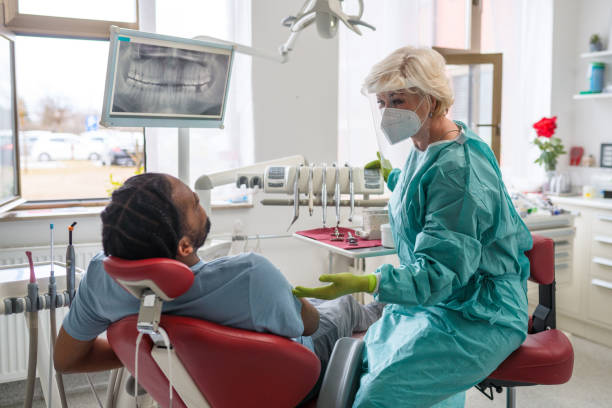
One of the most subtle changes in the treatment room, but also one of the most revolutionary, is the intraoral camera. The tiny device, which resembles an oversized pen more than a piece of medical equipment, has no megawatt laser beam or high-pitched whine. But it can transform a patient’s understanding of their own health more effectively than a dozen more obvious instruments.
Though different models vary in size and design, the basic concept remains the same: a pen-shaped tool with a camera on the end. The metal or plastic wand is fitted with a disposable plastic sheath and inserted into the patient’s mouth. Lower power magnification is usually enough to give a crystal-clear image of teeth or gums, and these images are showed on a screen in real time for the patient to see.
From Drills to Micro-Dentistry
A dental drill is typically the first thing that comes to mind when people think of dental anxiety. Laser dentistry and air abrasion techniques do not only minimize discomfort but also help eliminate anxiety for many patients.
Laser treatment using soft tissue causes less bleeding and quicker healing. Air abrasion is capable of removing early decay without the use of vibration, noise, or heat that comes with using a traditional dental drill. With both techniques, less staining of the tooth often occurs, and for small restorations, anesthesia may not even be necessary as there is less pain and discomfort. No more needles, no more waiting around for the numbness to subside, and no more dealing with discomfort and difficulty chewing solid food through the rest of the day.
Same-Day Restorations and the Waiting Room Problem
The traditional approach to getting a crown required two visits, a temporary fitting, and weeks of waiting while a lab processed your restoration. With CAD/CAM technology and CEREC systems specifically, which are the most common, a crown can be prepped, manufactured, and placed all in the same session.
Your tooth is prepared like normal, but instead of biting into that weird impression material for a few long minutes, a camera is waved around it to record your mouth digitally. The restoration is designed on a screen based on that image, and then a robotic arm carves it out of a ceramic block right there in the office.
There’s no second appointment, no temporary crown to pop off, no second injection, no risk the lab will botch the order, no need even to wear the mold in your mouth while this is being made in an off-site lab.
This isn’t just about saving time. As someone who finds the sound of the drill causing physical pain, the day-long dread and everything leading up to it is more of a cause of stress than a time spent in the chair, and the fewer of those the better. For millions who feel the same way, this means a much better experience visiting the dentist.
Technology as Empathy
The common thread running through all of these changes is not innovation for innovation’s sake. It’s about the fact that better tools and processes can make providers more transparent, less invasive, and more capable of focusing on the patient’s actual experience.
Augmented reality smile design lets patients see potential outcomes before committing to treatment. Biocompatible materials mean restorations that are safer and more natural-looking than what was standard a generation ago. Teledentistry opens initial consultations to people who can’t easily get to a clinic.
None of these technologies replace clinical judgment. But they extend what’s possible within a single appointment and lower the barriers that keep anxious patients from walking through the door in the first place. Patients who haven’t been to a dentist in years might find the current experience bears very little resemblance to what they’re avoiding.
Staff Writer; Bobby Short