(Akiit.com) Boxer Floyd Mayweather Jr. was sentenced Wednesday to 90 days in jail after pleading guilty to reduced battery domestic violence and harassment charges before a Las Vegas judge.

The 34-year-old Mayweather also was ordered to complete 100 hours of community service and pay a $2,500 fine.

The plea deal avoids trial on felony allegations that he hit his ex-girlfriend and threatened two of their children during an argument at her home in September 2010.

Prosecutor Lisa Luzaich told Judge Melissa Saragosa that Mayweather has been in trouble before and hasn’t been punished.

“He just continually gets himself into trouble and he is able to get himself out of it as well,” she said. “Essentially it is because he is who he is and is able to get away with everything.”

“He just continually gets himself into trouble and he is able to get himself out of it as well. Essentially it is because he is who he is and is able to get away with everything.

“The only thing that’s going to get this man’s attention is incarceration,” the prosecutor said.

Mayweather stood still in a striped olive vest and made no reaction when the judge imposed the sentence. He was told to report to jail on Jan. 6.

Mayweather and his manager, Leonard Ellerbe, declined comment outside the courtroom.

Attorney Karen Winckler had argued that the public would benefit more if Mayweather performs 100 hours of community service with children.

Winckler said she wanted to confer with Mayweather before deciding whether to appeal.

The judge said she was swayed by Mayweather’s admission that he hit Harris and twisted her arm, and that two of their children, ages 9 and 10 witnessed the attack.
Read The Full Story…

(Akiit.com) Just like the whole Steroid Era: We’ll never really know. Even the one charge that left Barry Bonds a convicted felon didn’t specify steroids.

Instead, a federal court jury found the home run king guilty of obstruction of justice Tuesday for giving an evasive answer under oath more than seven years ago. Rather than say “yes” or “no” to whether he received drugs that required a syringe, Bonds gave a rambling response to a grand jury, stating: “I became a celebrity child with a famous father.”

The decision from the eight women and four men who listened to testimony during the 12-day trial turned out to be a mixed and muddled verdict on the slugger that left more questions than answers.

U.S. District Judge Susan Illston declared a mistrial on the three charges that Bonds made false statements when he told a grand jury in December 2003 that he never knowingly received steroids and human growth hormone from trainer Greg Anderson and that he allowed only doctors to inject him.

Defense lawyers will try to persuade Illston or the 9th U.S. Circuit Court of Appeals to toss out the lone conviction. Federal prosecutors must decide whether it is worth the time and expense to try Bonds for a second time on the deadlocked charges.

Less than two miles from the ballpark where he broke Hank Aaron’s career home run record in August 2007, Bonds walked out of the Phillip Burton Federal Building on a sunny, windy afternoon and looked on as his lead lawyer, Allen Ruby, held a sidewalk news conference. Ruby instructed Bonds not to comment because the case wasn’t over.

Impeccably dressed in black suit and purple necktie, with a few days of stubble on his chin, Bonds flashed a victory sign to a few fans.

“Are you celebrating tonight?” one asked.

“There’s nothing to celebrate,” he replied.

While Bonds stood on the sidewalk on the courthouse’s north side, the jurors – whose names are being withheld until Thursday – went out the south entrance and many lingered to answer questions. For now, most only would give their first names.

Amber, a 19-year-old blonde woman who was the youngest juror, said the final votes were 8-4 to acquit Bonds of lying about steroids and 9-3 to acquit him on lying about HGH use. The panel voted 11-1 to convict him of getting an injection from someone other than his doctor, with one woman holding out, she said.

Jurors decided to convict Bonds on the obstruction count on Tuesday; on Wednesday they decided they could not come to unanimous decisions on the rest.

There was initial confusion when the jurors informed Illston’s clerk, Tracy Forakis, that they had reached a verdict, and the court made a public announcement. But when Forakis went back to the jury room, the panel said the verdict form wasn’t completed because there was a deadlock. The court then issued a retraction of its verdict announcement and Illston convened the lawyers, first without jurors, then with them, and learned they were stalemated on at least some of the charges.

Bonds, the seven-time National League MVP, chatted with his lawyers while Illston and the jury went back behind closed doors. When they returned, Illston opened a manila envelope with the verdict and handed it to Forakis to read.

Bonds leaned forward, looked at the clerk, but never reacted when the verdict was read. His mother, Pat, watched from a second-row bench.

“Divided, not unanimous,” on count one.

“Divided, not unanimous,” on count two.

“Divided, not unanimous,” on count three.

And then, just when it appeared Bonds would escape unscathed, came the final word from the jury:

“Guilty,” on obstruction of justice.

Dennis Riordan, one of the lawyers on Bonds’ legal team that numbered as many as 13 some days, asked Illston to throw out the guilty verdict and for a new trial on that count. Assistant U.S. Attorney Matthew Parrella asked the judge to set a sentencing date. Instead, Illston announced a May 20 date for a status conference.

“This case is about upholding one of the most fundamental principles in our system of justice – the obligation of every witness to provide truthful and direct testimony in judicial proceedings,” Melinda Haag, the U.S. Attorney in San Francisco, said in a statement. “In the United States, taking an oath and promising to testify truthfully is a serious matter. We cannot ignore those who choose instead to obstruct justice. We will decide whether to seek a retrial of the defendant on the remaining counts as soon as possible.”

Now 46 and far trimmer than he appeared in the final years of his career, Bonds faces up to 10 years in prison on the obstruction conviction. Yet federal guidelines call for 15-21 months.

For similar offenses in the Bay Area Laboratory Co-Operative steroids ring case, known as BALCO, Illston sentenced cyclist Tammy Thomas to six months of home confinement and track coach Trevor Graham to one year of home confinement.

Baseball’s season (73) and career (762) record-holder for home runs, Bonds testified before a grand jury that Anderson told him the substances he was giving Bonds were flaxseed oil and arthritic balm, and that Bonds didn’t know they were designer steroids.

“Did Greg ever give you anything that required a syringe to inject yourself with?” Bonds was asked.

His answer meandered, talking about his friendship with Anderson. The underlined part in the indictment, the crime he was convicted of, was this response: “That’s what keeps our friendship. You know, I am sorry, but that – you know, that – I was a celebrity child, not just in baseball by my own instincts. I became a celebrity child with a famous father. I just don’t get into other people’s business because of my father’s situation, you see.”

The jury instruction said that to be convicted, Bonds must be found to have “obstructed, influenced or impeded, or endeavored to obstruct, influence, or impede” the grand jury “by knowingly giving material testimony that was intentionally evasive, false or misleading.”

The defense plans to argue that Bonds’ answer wasn’t relevant to the grand jury.

The government “has determined it’s unlawful for Barry Bonds to tell the grand jury he’s a celebrity child and to talk about his friendship with Greg Anderson,” Ruby said.

Jurors said they unanimously agreed Tuesday on the obstruction verdict.

“When you’re in front of a grand jury you have to answer, and he gave a (expletive) answer,” said Fred Jacob, the 56-year-old jury foreman. “He gave a story rather than a yes-or-no answer.”

Jurors generally spent one day of deliberations on each count.

A 60-year-old juror, who identified himself only as Steve, thought the defense successfully impeached key prosecution witnesses Steve and Kathy Hoskins and Kimberly Bell during cross-examination.

“They tried to discredit the witnesses. They tried to make the prosecutors look like bad guys. Were they successful in doing that? Yes,” he said.

He also said the government was hurt by Bonds’ physician, Dr. Arthur Ting, who refuted many of Steve Hoskins’ allegations.

“I think the prosecutors got a big bomb thrown in their lap,” Steve said.

Jacob said the absence of Anderson – who was imprisoned during the trial on a contempt citation for refusing to testify – hindered the government’s ability to prove Bonds lied about steroids.

“We couldn’t connect the dots between steroids, Greg and Barry,” he said.

On the HGH count, he said: “There just wasn’t any evidence. HGH is very hard to detect and there wasn’t any scientific evidence. Everything was circumstantial.”

The holdout on the “needle” count was a juror who identified herself as Nyiesha. She said she didn’t believe the testimony of Bonds’ personal shopper Kathy Hoskins, who told the jury she watched Anderson inject the slugger in the belly.

“They were family,” Nyiesha said of the Hoskins siblings. “That left me with reasonable doubt.”

Nyiesha, a 28-year-old nurse, said she almost changed her mind Monday, but decided to remain steadfast after “sleeping on it.”

Other jurors said they found Kathy Hoskins to be the most credible of the central witnesses.

Jacob didn’t hold out much hope for prosecutors gaining additional convictions in a retrial.

If they want to “pursue this case,” he said, “they’re going to have to do more homework than they did.”

Bonds became the 11th person – and fourth athlete – who either was convicted or pleaded guilty in the BALCO case, which began in 2002. Other athletes, besides Thomas, include NFL defensive lineman Dana Stubblefield and Olympic track gold medalist Marion Jones, who also pleaded guilty in a check-fraud scheme.
Read The Full Story…

(Akiit.com) Serena Williams is proof to me that perfection exists. She serves the ball at a phenomenal 110 MPH. She moves baseline to baseline with the ease of a gazelle. She walks and talks, without saying much, like she’s proud of who and what she is. Not to mention she’s beautiful.

My first encounter with the Williams sisters was back in 2000, when on two separate occasions I spent two weeks with both sisters and their father Richard Williams. Here was Serena, tall, confident but a little standoffish. And there was Venus, open, honest and funny. Mr. Williams? Wise beyond your imagination. To say I was impressed is an understatement.

This was at a time when Mr. Williams was viewed as this crazy, outlandish man. But what people didn’t understand is this — he was crazy like a fox.

Views were so ignorant about him that I ended up in a nasty argument with my sports editor at the time, after he changed my story and called the Williams sisters “scary” in the first paragraph. How dare you call two black women, who welcomed me into their lives scary? Needless to say, I felt it was borderline racist.

My sports editor was convinced that Mr. Williams was nuts. After all, this was a black man from Compton. There was no way he could craft the careers of two young black women like this. How can he have this kind of insight into his children? How dare he show this kind of love and affection? Well, what I’ve learned over the years is that people know their children. And Mr. Williams knew his. He said Serena was going to be the greater of the two — and he never lied.

So when I heard that Serena had suffered a pulmonary embolism during the NBA All-Star break in Los Angeles, a subsequent hematoma, and had been hospitalized 10 days ago, I immediately reflected back to this young lady that I first met over 10 years ago. I immediately thought back to Mr. Williams and his admiration for his daughter, and when I saw that she said “My day could not get any worse,” I wasn’t surprised. I thought about a family that couldn’t help but be in peril.
Read The Full Story…

(Akiit.com) Michael Vick is making plans to get ready for next season despite the NFL’s labor situation.

The Philadelphia Eagles’ Pro Bowl quarterback says he’ll work out with some of his teammates on their own if there’s a lockout. The league and the players’ union agreed Friday on a seven-day extension of the collective bargaining agreement.

“Wherever we agree to be collectively. It may be Florida, it may be Hawaii. We’ll get our work in,” Vick said. “Being on the same page, timing, which is very important. I think everybody has to be on one accord, all thinking the same. Practice and film study are important, but just familiarizing ourselves with each other, that’s going to be big for us.”

Vick was in Atlantic City to receive the Maxwell Award for outstanding professional player. Eagles coach Andy Reid also was to be honored as the outstanding coach in a Friday night ceremony.

Vick, who signed a one-year contract with the Eagles after being designated the franchise player, said a long-term deal hasn’t been discussed yet. However, it’s likely that would happen once the new CBA is agreed upon.

Under rules of the current agreement, a team must pay a franchise player the average of the top five salaries at his position. Vick would make at least $16 million under this tag.

“We haven’t talked about long-term negotiations or my future. We just talked about what can get done this year,” Vick said. “I think that anything else that happens is solely on me. I think I dictate the situation based on my play and performance and my actions on and off the field. So that ball is in my court, I think. The most important part is going out and playing good football and trying to bring something to the city that we’ve been looking for for a long time.”

Vick led the Eagles to a 10-6 record and the NFC East title after replacing an injured Kevin Kolb in Week 1. Despite missing three games with an injury, Vick had his best season. He set career highs in passing yards (3,018), passing touchdowns (21), rushing touchdowns (9), completion percentage (62.6) and passer rating (100.2).

Vick was voted The Associated Press Comeback Player of the Year after missing two seasons while serving a federal prison sentence for dog fighting and playing sparingly in 2009.
Read The Full Story…

(Akiit.com) It’s the kind of conversation the so called “black bourgeoisie” loves to talk about — ‘how far we’ve come.’ And this Sunday as Super Bowl parties get under way, folks will find a way to rationalize the good things that have happened with the black coach in the NFL.

Everyone will smile. The conversation will be light. Phoniness will ooze throughout the room. And the ancestors, who made Black History Month possible, will not be talked about. I suspect that Tony Dungy will be held up as this “nice” Christian man who worked within the system to break down barriers. How great does that sound?

The talk will go like this: “It was just the right thing to do.” Hiring black head coaches that is. “You see, I try to tell people that Rome wasn’t built in a day, you can’t fight City Hall, and you have to go along, to get along — that’s if you want to break down barriers.”

Of course I’m being facetious here. The reality is this, sometimes you have to kick in the door, to get where you want to go. And Dungy is the rule vs. the exception.

Call it what you will — Karma or poetic justice — but Dungy maneuvered the system by being The Spook Who Sat by the Door vs. Booker T. Washington’s Up from Slavery. When he had an opportunity, he hired a bevy of African-Americans while serving as head coach in Tampa Bay and became the first black head coach to win a Super Bowl with the Indianapolis Colts in 2007. Keep in mind; he was essentially forced out of Tampa Bay. But things have a way of coming full circle, especially when you’re good.

And when Dungy and the Chicago Bears’ Lovie Smith became the first African-American head coaches to lead their respective teams to the Super Bowl in February of 2007 — it was not only historical for America, it was different. It was new. It was special. I wonder how many of us sat in front of our television sets, with the same pride that our great-grandparents sat in front of their radios when Joe Louis beat Max Schmeling in 1938.

“The first step toward creating an improved future is developing the ability to envision it,” Dungy once said. “Vision will ignite the fire of passion that fuels our commitment to do whatever it takes to achieve excellence. Only vision allows us to transform dreams of greatness into the reality of achievement through human action. Vision has no boundaries and knows no limits. Our vision is what we become in life. ”

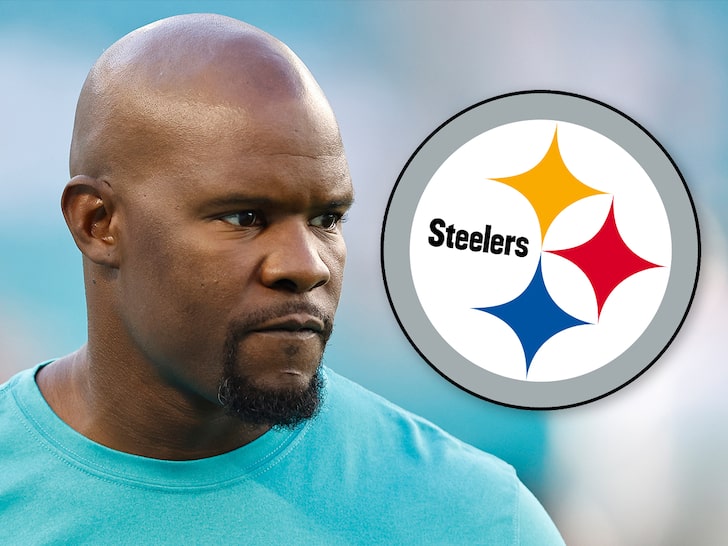
Dungy has provided us with a group of African-Americans who are not only head coaches in the NFL, but are thriving. As we know by now, Mike Tomlin, head coach of the Pittsburgh Steelers, has already won a Super Bowl and should be favored to win a second on Sunday. Although for some strange reason Green Bay is favored. Considering, Tomlin is the youngest head coach ever to win a Super Bowl at age 36. And the first coach in the history of the league to take two teams to the Super Bowl before the age of 40. He’s 38. This is extraordinary!
Read The Full Story…